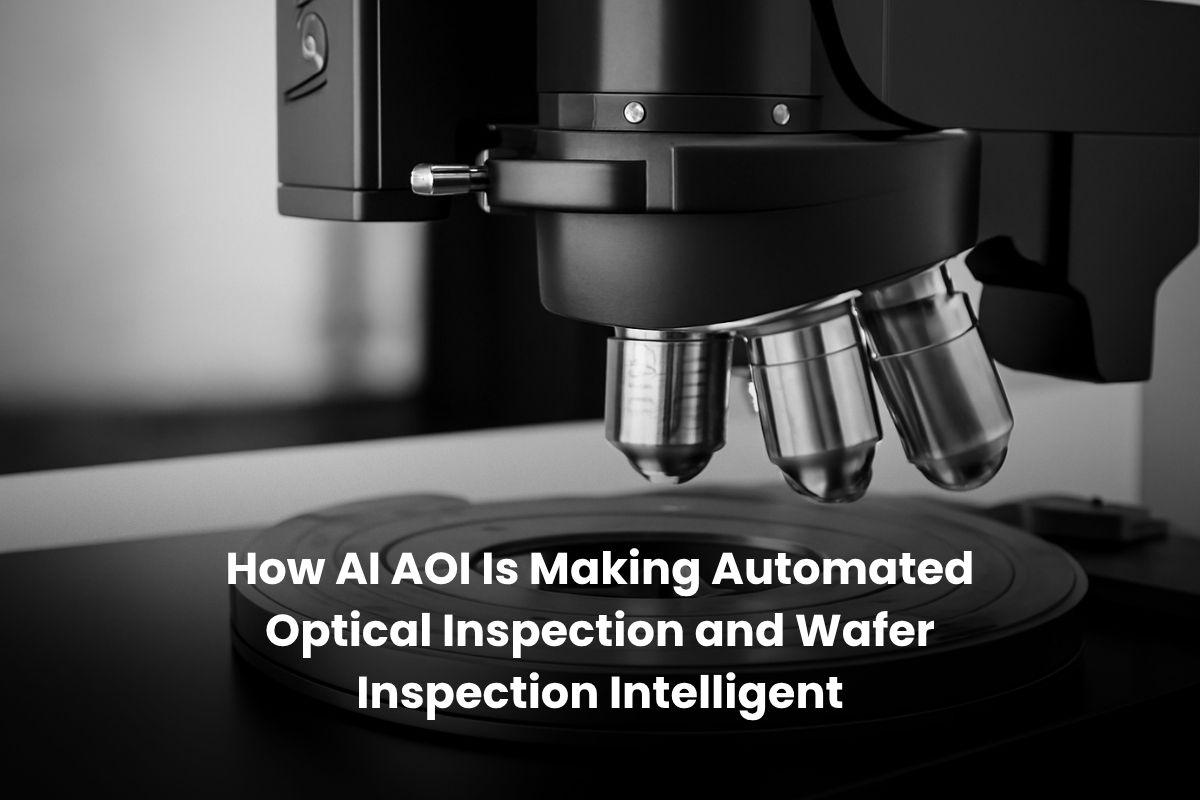
How AI AOI Is Making Automated Optical Inspection and Wafer Inspection Intelligent
Averroes
Mar 27, 2026
Traditional AOI was built on a simple promise: program the rules, and the machine catches the defects.
In practice, the reality is far messier.
Fixed-rule algorithms generate massive volumes of false positives – triggered by lighting shifts, minor cosmetic variations, or process drift unrelated to actual quality failures.
Operators waste hours reviewing non-defects. Yield suffers. Throughput slows. In high-mix environments, reprogramming recipes for every new product defeats the purpose of automation entirely.
At Averroes.ai, we solve this by making existing inspection equipment smarter – with AI AOI that layers on top of what you already have.
Key Notes
Deep learning cuts false positive rates by 70–90% which frees operators for real defect review.
Wafer inspection gains spatial defect analysis and root cause traceability, not just pass/fail detection.
Production-grade AI AOI accuracy starts with as few as 20–40 images per defect class.
AI AOI connects to MES and SCADA, turning inspection data into closed-loop process intelligence.
What We’ve Learned Deploying AI AOI on Real Production Lines
The gap between what traditional AOI promises and what it delivers in production comes down to one thing: rigidity.
Rule-based systems don’t adapt. They don’t learn. And they certainly don’t distinguish between a genuine solder bridge and a shadow that happens to look like one at 2 AM when the ambient temperature has shifted by three degrees.
Here’s what AI AOI – deployed correctly – actually changes:
Reduced False Calls:
Averroes.ai’s deep learning models learn the difference between true defects and normal process variation.
Unlike fixed-rule AOI, which flags anything outside a static threshold, our models adapt to the realities of a living production environment. Customers routinely see false-positive reductions of 70–90%, which translates directly into less operator fatigue and faster line throughput.
Sub-Pixel Defect Detection:
Using Convolutional Neural Networks (CNNs) and our proprietary cascading model architecture, Averroes.ai identifies defects that rule-based systems miss entirely – hairline cracks, micro-voids, subtle solder insufficiency – down to features smaller than 0.01 mm.
For wafer inspection, this includes particle contamination, pattern defects, and edge anomalies that traditional brightfield and darkfield systems struggle to classify accurately.
Production-Ready from Day One:
The biggest myth in manufacturing AI is that you need thousands (or tens of thousands) of labeled defect images before a model delivers value.
Averroes.ai’s VisionRepo platform and Core AI engine are architected to reach production-grade accuracy with as few as 20–40 images per defect class.
Where competitors require extensive image libraries before deployment even begins, our AI AOI models start delivering reliable classification almost immediately – making AI practical for high-mix, low-volume environments where defect examples are naturally scarce.
Anomaly Detection for the Unknown:
Not every defect has a name. Our WatchDog™ system uses unsupervised learning to flag anomalies that fall outside known defect categories – the “unknown unknowns” that no rule-based system can anticipate and that even supervised AI will miss if it hasn’t been trained on a specific failure mode.
The AOI Problem: A Closer Look
Traditional AOI, whether 2D or 3D, scans for a well-documented range of defects.
The technology itself isn’t the issue – the inspection hardware captures plenty of information. The issue is what happens after the image is captured. Rule-based classification generates noise.
Component Defects: Misalignment, missing components, wrong polarity, billboard, misorientation, and incorrect part placement.
Surface and Physical Defects: Scratches, contamination, board warping, lifted leads, and damaged or cracked components.
The hardware catches all of this. The problem is that it also flags thousands of images that look similar to these defects but aren’t.
That’s where Averroes.ai steps in – we sit on top of existing AOI infrastructure (Koh Young, CyberOptics, Mirtec, Viscom, KLA, Onto, or any camera-based system) and apply deep learning classification to separate real defects from noise.
Traditional AOI vs AI AOI
Feature
Traditional AOI
AI AOI
Automatic Defect Learning
❌
✔️
Environmental Adaptability
❌
✔️
Real-Time Process Adjustment
❌
✔️
No Reprogramming for New Products
❌
✔️
Anomaly Detection (Unknowns)
❌
✔️
Near-Zero False Positives
❌
✔️
Wafer Inspection: Where the Stakes Are Even Higher
Semiconductor wafer inspection introduces a different order of complexity.
Defect sizes are measured in nanometers. A single wafer can contain billions of transistors. And the cost of a missed defect doesn’t just mean a scrapped board – it means a failed die that may not surface until final test or, worse, in the field.
Here’s what Averroes.ai brings to wafer inspection:
Wafermap Intelligence:
Our platform ingests wafermap data and applies spatial defect analysis – identifying clustering patterns, edge signatures, and systematic vs. random defect distributions.
When defects cluster in a specific zone, that’s a signal about your etch, litho, or CMP process – and our system surfaces that signal automatically.
Multi-Modal Inspection:
Averroes.ai combines brightfield, darkfield, and electron microscopy image data into a unified classification pipeline. The same defect can look completely different depending on the imaging modality.
Our models are trained to correlate across modalities, reducing the manual burden of cross-referencing and providing a single source of truth for review disposition.
Root Cause Traceability:
AI doesn’t just tell you a defect exists – it helps trace the origin.
By correlating defect signatures with upstream process steps, Averroes.ai helps fab engineers identify whether a particle defect came from the deposition chamber, the photoresist process, or the handling equipment.
This shifts inspection from a gate-keeping function to a process improvement tool.
Why This Matters for Production, Not Just Technology
The business case for AI AOI isn’t theoretical.
Here’s what we see across our customer base:
Improved Yield:
Reducing false positives means operators focus on real defects. Catching true defects earlier – especially in wafer fab, where rework options are limited – prevents defective material from consuming downstream process capacity.
Customers see 99%+ detection accuracy and submicron defect discovery improved by 40–60%.
Faster Review Cycles:
When AI AOI pre-classifies inspection results and filters out false calls, the manual review queue shrinks dramatically.
What used to take a team of operators an entire shift to review can be reduced to minutes of focused verification on flagged images that genuinely require human judgment.
Customers save 300+ hours of reinspection labor per month, per application.
High-Mix Flexibility:
This is where traditional AOI breaks down most visibly. Every new product requires recipe development, golden board calibration, and threshold tuning.
Averroes.ai’s adaptive AI AOI models learn from minimal data – 20–40 images per defect class – meaning new products can be onboarded in hours, not weeks, without dedicated vision engineers writing rules from scratch.
No Forklift Upgrade Required:
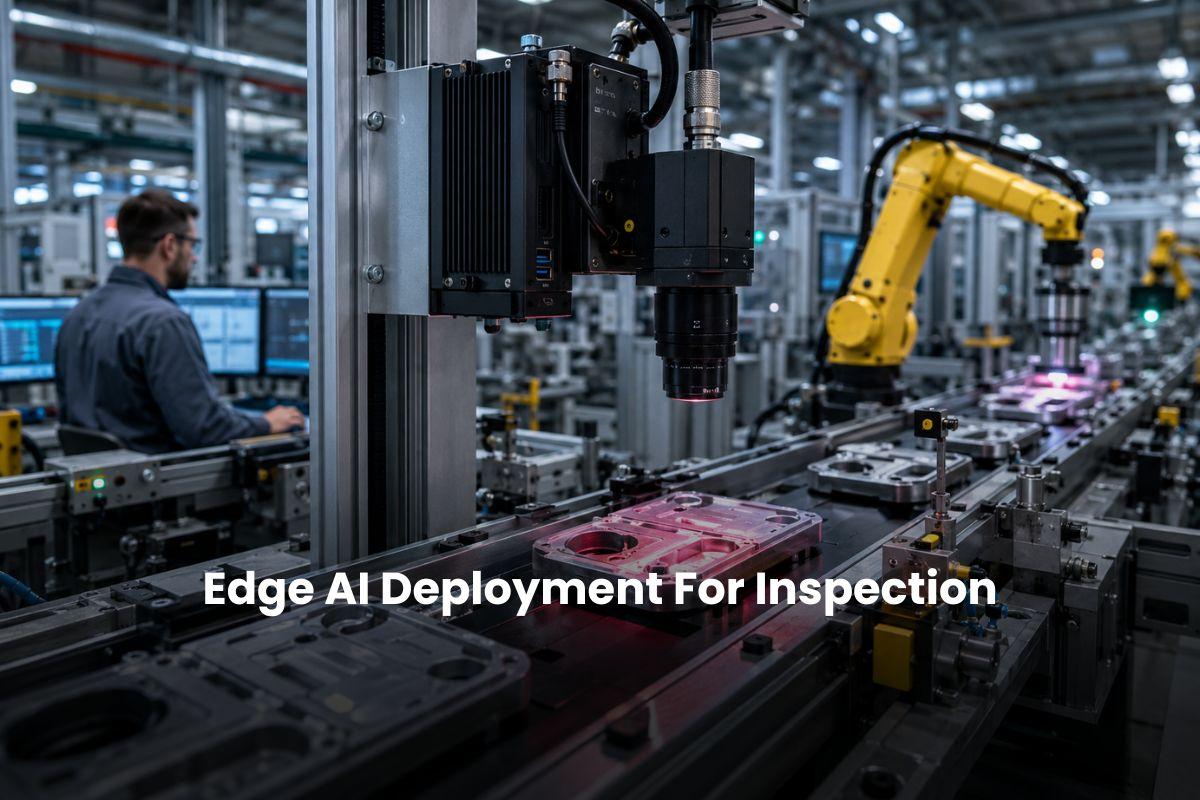
Averroes.ai deploys as a software layer on top of existing inspection infrastructure.
Customers keep their current AOI and wafer inspection hardware. We make the classification smarter without requiring capital expenditure on new equipment.
The Technology Under the Hood
Cascading Model Architecture:
Averroes.ai doesn’t rely on a single monolithic model.
Our approach uses a cascade of specialized models – a first-pass model for broad classification, followed by specialist models for specific defect types. This architecture achieves both speed (for inline inspection) and precision (for critical defect categories).
Deep Learning That Adapts:
Our active learning pipeline continuously improves. When an operator overrides an AI classification, that feedback is captured and used to retrain.
The system gets smarter with every shift, every product change, and every edge case the production line throws at it.
Smart Factory Integration:
Averroes.ai connects to MES, SCADA, SPC, and factory data systems to provide closed-loop quality intelligence.
Defect data doesn’t just live in the inspection station – it flows into dashboards, yield management systems, and process control tools where engineers can act on it.
How Many Defects Is Your Current AOI Missing?
Find out what rule-based inspection can’t catch – without replacing anything.
The Bottom Line
AOI and wafer inspection equipment capture enormous amounts of visual data.
The problem was never the camera – it was the brain behind it. Rule-based algorithms were a necessary starting point, but they’ve hit their ceiling. Deep learning, deployed correctly and with manufacturing-specific design, is the upgrade that turns AI AOI from a bottleneck into a competitive advantage.
At Averroes.ai, we’ve seen this transformation firsthand across semiconductor, automotive, solar, and electronics manufacturing. The technology works. The ROI is measurable. And the best part: you don’t have to rip out what you already have to get there.
Ready to see it on your line? Book a free demo and we’ll show you what AI AOI delivers on your existing equipment.
Tareq Aljaber is the CEO and Founder of Averroes.ai, an AI visual inspection platform serving semiconductor, automotive, and electronics manufacturers. With 23 years of product development experience at Microsoft, Adobe, Atlassian, and Samsung, Tareq founded Averroes.ai to bring production-grade deep learning to manufacturing quality control.
Frequently Asked Questions About AI AOI and Wafer Inspection
How does AI AOI reduce false positives?
Traditional AOI uses fixed rules and static thresholds that can’t distinguish between real defects and normal process variation – such as lighting changes, minor cosmetic differences, or acceptable tolerance drift. AI AOI systems like Averroes.ai use deep learning models trained on production data to recognize what a true defect looks like in context, filtering out noise that would otherwise trigger false alarms. Manufacturers using Averroes.ai typically see false-positive reductions of 70–90%.
Can AI AOI work with existing inspection equipment?
Yes. Averroes.ai deploys as a software layer on top of existing AOI hardware – including systems from Koh Young, CyberOptics, Mirtec, Viscom, KLA, Onto, and other camera-based platforms. There’s no need to replace your current inspection infrastructure. The AI enhances the classification and decision-making that happens after the image is captured.
What types of defects can AI AOI detect in PCB and wafer inspection?
AI AOI detects soldering defects (bridges, insufficient solder, tombstoning, cold joints), component defects (misalignment, missing parts, wrong polarity), and surface defects (scratches, contamination, warping). For semiconductor wafer inspection, Averroes.ai identifies particle contamination, pattern defects, edge anomalies, and uses wafermap analysis to detect spatial clustering patterns that indicate upstream process issues.
How much training data does AI AOI require?
Averroes.ai reaches production-grade accuracy with as few as 20–40 images per defect class. This makes AI AOI practical for high-mix, low-volume manufacturing environments where defect examples are naturally limited.
What is the difference between AI AOI and traditional rule-based AOI?
Rule-based AOI relies on programmed thresholds and geometric rules that must be manually tuned for each product and don’t adapt to process variation. AI AOI uses deep learning to learn defect patterns from data, adapts to normal production variation, and continuously improves through operator feedback. The result is higher detection accuracy, dramatically fewer false positives, and faster onboarding of new products.
How does AI AOI help with semiconductor wafer inspection specifically?
Averroes.ai applies spatial defect analysis to wafermap data, identifying clustering patterns and systematic versus random defect distributions that signal upstream process issues. The platform also correlates defect signatures across imaging modalities (brightfield, darkfield) and traces root causes back to specific process steps – turning inspection into a process improvement tool, not just a pass/fail gate.








Traditional AOI was built on a simple promise: program the rules, and the machine catches the defects.
In practice, the reality is far messier.
Fixed-rule algorithms generate massive volumes of false positives – triggered by lighting shifts, minor cosmetic variations, or process drift unrelated to actual quality failures.
Operators waste hours reviewing non-defects. Yield suffers. Throughput slows. In high-mix environments, reprogramming recipes for every new product defeats the purpose of automation entirely.
At Averroes.ai, we solve this by making existing inspection equipment smarter – with AI AOI that layers on top of what you already have.
Key Notes
What We’ve Learned Deploying AI AOI on Real Production Lines
The gap between what traditional AOI promises and what it delivers in production comes down to one thing: rigidity.
Rule-based systems don’t adapt. They don’t learn. And they certainly don’t distinguish between a genuine solder bridge and a shadow that happens to look like one at 2 AM when the ambient temperature has shifted by three degrees.
Here’s what AI AOI – deployed correctly – actually changes:
Reduced False Calls:
Averroes.ai’s deep learning models learn the difference between true defects and normal process variation.
Unlike fixed-rule AOI, which flags anything outside a static threshold, our models adapt to the realities of a living production environment. Customers routinely see false-positive reductions of 70–90%, which translates directly into less operator fatigue and faster line throughput.
Sub-Pixel Defect Detection:
Using Convolutional Neural Networks (CNNs) and our proprietary cascading model architecture, Averroes.ai identifies defects that rule-based systems miss entirely – hairline cracks, micro-voids, subtle solder insufficiency – down to features smaller than 0.01 mm.
For wafer inspection, this includes particle contamination, pattern defects, and edge anomalies that traditional brightfield and darkfield systems struggle to classify accurately.
Production-Ready from Day One:
The biggest myth in manufacturing AI is that you need thousands (or tens of thousands) of labeled defect images before a model delivers value.
Averroes.ai’s VisionRepo platform and Core AI engine are architected to reach production-grade accuracy with as few as 20–40 images per defect class.
Where competitors require extensive image libraries before deployment even begins, our AI AOI models start delivering reliable classification almost immediately – making AI practical for high-mix, low-volume environments where defect examples are naturally scarce.
Anomaly Detection for the Unknown:
Not every defect has a name. Our WatchDog™ system uses unsupervised learning to flag anomalies that fall outside known defect categories – the “unknown unknowns” that no rule-based system can anticipate and that even supervised AI will miss if it hasn’t been trained on a specific failure mode.
The AOI Problem: A Closer Look
Traditional AOI, whether 2D or 3D, scans for a well-documented range of defects.
The technology itself isn’t the issue – the inspection hardware captures plenty of information. The issue is what happens after the image is captured. Rule-based classification generates noise.
Typical Defects Detected by AOI Systems:
The hardware catches all of this. The problem is that it also flags thousands of images that look similar to these defects but aren’t.
That’s where Averroes.ai steps in – we sit on top of existing AOI infrastructure (Koh Young, CyberOptics, Mirtec, Viscom, KLA, Onto, or any camera-based system) and apply deep learning classification to separate real defects from noise.
Traditional AOI vs AI AOI
Wafer Inspection: Where the Stakes Are Even Higher
Semiconductor wafer inspection introduces a different order of complexity.
Defect sizes are measured in nanometers. A single wafer can contain billions of transistors. And the cost of a missed defect doesn’t just mean a scrapped board – it means a failed die that may not surface until final test or, worse, in the field.
Here’s what Averroes.ai brings to wafer inspection:
Wafermap Intelligence:
Our platform ingests wafermap data and applies spatial defect analysis – identifying clustering patterns, edge signatures, and systematic vs. random defect distributions.
This isn’t just defect detection; it’s process diagnostics.
When defects cluster in a specific zone, that’s a signal about your etch, litho, or CMP process – and our system surfaces that signal automatically.
Multi-Modal Inspection:
Averroes.ai combines brightfield, darkfield, and electron microscopy image data into a unified classification pipeline. The same defect can look completely different depending on the imaging modality.
Our models are trained to correlate across modalities, reducing the manual burden of cross-referencing and providing a single source of truth for review disposition.
Root Cause Traceability:
AI doesn’t just tell you a defect exists – it helps trace the origin.
By correlating defect signatures with upstream process steps, Averroes.ai helps fab engineers identify whether a particle defect came from the deposition chamber, the photoresist process, or the handling equipment.
This shifts inspection from a gate-keeping function to a process improvement tool.
Why This Matters for Production, Not Just Technology
The business case for AI AOI isn’t theoretical.
Here’s what we see across our customer base:
Improved Yield:
Reducing false positives means operators focus on real defects. Catching true defects earlier – especially in wafer fab, where rework options are limited – prevents defective material from consuming downstream process capacity.
Customers see 99%+ detection accuracy and submicron defect discovery improved by 40–60%.
Faster Review Cycles:
When AI AOI pre-classifies inspection results and filters out false calls, the manual review queue shrinks dramatically.
What used to take a team of operators an entire shift to review can be reduced to minutes of focused verification on flagged images that genuinely require human judgment.
Customers save 300+ hours of reinspection labor per month, per application.
High-Mix Flexibility:
This is where traditional AOI breaks down most visibly. Every new product requires recipe development, golden board calibration, and threshold tuning.
Averroes.ai’s adaptive AI AOI models learn from minimal data – 20–40 images per defect class – meaning new products can be onboarded in hours, not weeks, without dedicated vision engineers writing rules from scratch.
No Forklift Upgrade Required:
Averroes.ai deploys as a software layer on top of existing inspection infrastructure.
Customers keep their current AOI and wafer inspection hardware. We make the classification smarter without requiring capital expenditure on new equipment.
The Technology Under the Hood
Cascading Model Architecture:
Averroes.ai doesn’t rely on a single monolithic model.
Our approach uses a cascade of specialized models – a first-pass model for broad classification, followed by specialist models for specific defect types. This architecture achieves both speed (for inline inspection) and precision (for critical defect categories).
Deep Learning That Adapts:
Our active learning pipeline continuously improves. When an operator overrides an AI classification, that feedback is captured and used to retrain.
The system gets smarter with every shift, every product change, and every edge case the production line throws at it.
Smart Factory Integration:
Averroes.ai connects to MES, SCADA, SPC, and factory data systems to provide closed-loop quality intelligence.
Defect data doesn’t just live in the inspection station – it flows into dashboards, yield management systems, and process control tools where engineers can act on it.
How Many Defects Is Your Current AOI Missing?
Find out what rule-based inspection can’t catch – without replacing anything.
The Bottom Line
AOI and wafer inspection equipment capture enormous amounts of visual data.
The problem was never the camera – it was the brain behind it. Rule-based algorithms were a necessary starting point, but they’ve hit their ceiling. Deep learning, deployed correctly and with manufacturing-specific design, is the upgrade that turns AI AOI from a bottleneck into a competitive advantage.
At Averroes.ai, we’ve seen this transformation firsthand across semiconductor, automotive, solar, and electronics manufacturing. The technology works. The ROI is measurable. And the best part: you don’t have to rip out what you already have to get there.
Ready to see it on your line? Book a free demo and we’ll show you what AI AOI delivers on your existing equipment.
Tareq Aljaber is the CEO and Founder of Averroes.ai, an AI visual inspection platform serving semiconductor, automotive, and electronics manufacturers. With 23 years of product development experience at Microsoft, Adobe, Atlassian, and Samsung, Tareq founded Averroes.ai to bring production-grade deep learning to manufacturing quality control.
Learn more at averroes.ai
Frequently Asked Questions About AI AOI and Wafer Inspection
How does AI AOI reduce false positives?
Traditional AOI uses fixed rules and static thresholds that can’t distinguish between real defects and normal process variation – such as lighting changes, minor cosmetic differences, or acceptable tolerance drift. AI AOI systems like Averroes.ai use deep learning models trained on production data to recognize what a true defect looks like in context, filtering out noise that would otherwise trigger false alarms. Manufacturers using Averroes.ai typically see false-positive reductions of 70–90%.
Can AI AOI work with existing inspection equipment?
Yes. Averroes.ai deploys as a software layer on top of existing AOI hardware – including systems from Koh Young, CyberOptics, Mirtec, Viscom, KLA, Onto, and other camera-based platforms. There’s no need to replace your current inspection infrastructure. The AI enhances the classification and decision-making that happens after the image is captured.
What types of defects can AI AOI detect in PCB and wafer inspection?
AI AOI detects soldering defects (bridges, insufficient solder, tombstoning, cold joints), component defects (misalignment, missing parts, wrong polarity), and surface defects (scratches, contamination, warping). For semiconductor wafer inspection, Averroes.ai identifies particle contamination, pattern defects, edge anomalies, and uses wafermap analysis to detect spatial clustering patterns that indicate upstream process issues.
How much training data does AI AOI require?
Averroes.ai reaches production-grade accuracy with as few as 20–40 images per defect class. This makes AI AOI practical for high-mix, low-volume manufacturing environments where defect examples are naturally limited.
What is the difference between AI AOI and traditional rule-based AOI?
Rule-based AOI relies on programmed thresholds and geometric rules that must be manually tuned for each product and don’t adapt to process variation. AI AOI uses deep learning to learn defect patterns from data, adapts to normal production variation, and continuously improves through operator feedback. The result is higher detection accuracy, dramatically fewer false positives, and faster onboarding of new products.
How does AI AOI help with semiconductor wafer inspection specifically?
Averroes.ai applies spatial defect analysis to wafermap data, identifying clustering patterns and systematic versus random defect distributions that signal upstream process issues. The platform also correlates defect signatures across imaging modalities (brightfield, darkfield) and traces root causes back to specific process steps – turning inspection into a process improvement tool, not just a pass/fail gate.