Every board that leaves your line carries your reputation with it. One missed solder bridge or misaligned component can ripple into rework, RMAs, or worse.
That’s why PCB visual inspection sits at the heart of electronics manufacturing.
The challenge is choosing the right mix of speed, depth, and cost across different inspection methods.
We’ll break down the tools, workflows, and tradeoffs that shape inspection performance on real production floors.
Key Notes
2D AOI, 3D AOI, and X-ray solve fundamentally different risk layers.
Poor lighting, magnification, and calibration quietly skew inspection outcomes.
AI overlays lift AOI accuracy toward 99% without replacing existing hardware.
What Is PCB Visual Inspection?
Visual inspection in PCB manufacturing involves examining circuit boards for visible defects using either manual techniques or automated methods.
The primary goal is to verify that the board is free from flaws that could impede functionality or compromise reliability.
Poor Solder Joints: Ensuring connections are solid and properly formed to prevent intermittent failures.
Incorrect Component Placement: Checking that all components are correctly oriented and securely attached.
Physical Damage: Inspecting for scratches, cracks, or other damage that may affect performance.
Importance of PCB Visual Inspection in Electronics Manufacturing
PCB visual inspection plays a vital role in maintaining the reliability and performance of electronic devices.
Here are some key points underscoring its importance:
PCB Visual Inspection Procedures
Effective PCB visual inspection requires a systematic and organized approach:
1. Review Inspection Criteria
Before starting any inspection, familiarize yourself with the specific criteria outlined by relevant standards like IPC-A-610.
Understanding these criteria helps in identifying potential defects and maintaining quality standards.
2. Prepare the Workspace
A clean and organized workspace is essential for effective inspection. Ensure the area is clear of unnecessary items to prevent contamination.
Proper grounding is also critical to avoid electrostatic discharge (ESD) damage, so confirm that you and the workspace meet ESD safety standards.
3. Set Up Lighting
Adequate lighting is vital for visual inspection. According to IPC requirements, a minimum of 1000 lumens per square meter should be used.
Utilize task lighting, overhead lights, or portable light sources to create well-lit conditions that enhance visibility.
4. Utilize Magnification Tools
Magnifying tools, such as lenses or digital microscopes, provide better visibility of fine details on the PCB.
Choosing the right magnification is crucial—typically, levels between 5x and 10x suffice for most components.
5. Conduct the Inspection
Inspect the PCB systemically, moving methodically to cover different areas. Begin with component placement, checking for proper alignment and connections.
Pay close attention to common defects such as cold solder joints, solder bridges, and misaligned components.
Document any anomalies using a checklist to ensure thoroughness and traceability.
6. Final Review and Documentation
After completing the inspection, conduct a final review of all noted defects. Accurately log these findings and prepare a detailed report outlining the issues and recommendations for corrective action.
This documentation aids in tracking recurring problems and supports continuous improvement efforts.
PCB Visual Inspection Guidelines
Use Checklists: Tailored checklists ensure all critical inspection criteria, such as solder quality and component placement, are systematically covered.
Lighting Techniques: Employ varied lighting methods, like backlighting or angled lighting, to reveal subtle defects not visible under direct lighting.
Regular Calibration of Equipment: Regularly calibrate magnification tools and lighting equipment to maintain accuracy and effectiveness in defect detection.
Continuous Training: Invest in ongoing training for inspectors to keep them updated on the latest techniques and standards for identifying defects effectively.
Comparison with Reference Samples: Use “golden boards” or defect-free samples during inspections to help quickly identify deviations from quality standards.
Types of PCB Inspection Methods
Manual Visual Inspection (MVI)
Manual Visual Inspection remains one of the most traditional methods for assessing PCB quality, requiring skilled technicians to examine boards for surface-level defects.
Techniques and Best Practices
Systematic Scanning: You should adopt a grid scanning approach. Starting from the edges and moving inward ensures thorough coverage of the entire board.
Use of Magnification Tools: Magnifying glasses and digital microscopes improve visibility for fine details like small components and solder joints. Typically, a magnification level of 5x to 10x is adequate based on PCB complexity.
Proper Lighting: Aim for at least 1000 lumens per square meter to illuminate the board effectively. Angled lighting can specifically help uncover issues like solder bridges.
Documentation of Findings: Keep detailed records of any defects found during inspections. This practice supports traceability and quality improvement efforts.
Limitations of MVI
Human Error: You must be aware that fatigue can lead to missed defects, which is why thorough training for inspectors is essential.
Surface-Level Only: MVI is limited to surface inspection and cannot identify internal defects hidden beneath components like Ball Grid Arrays (BGAs).
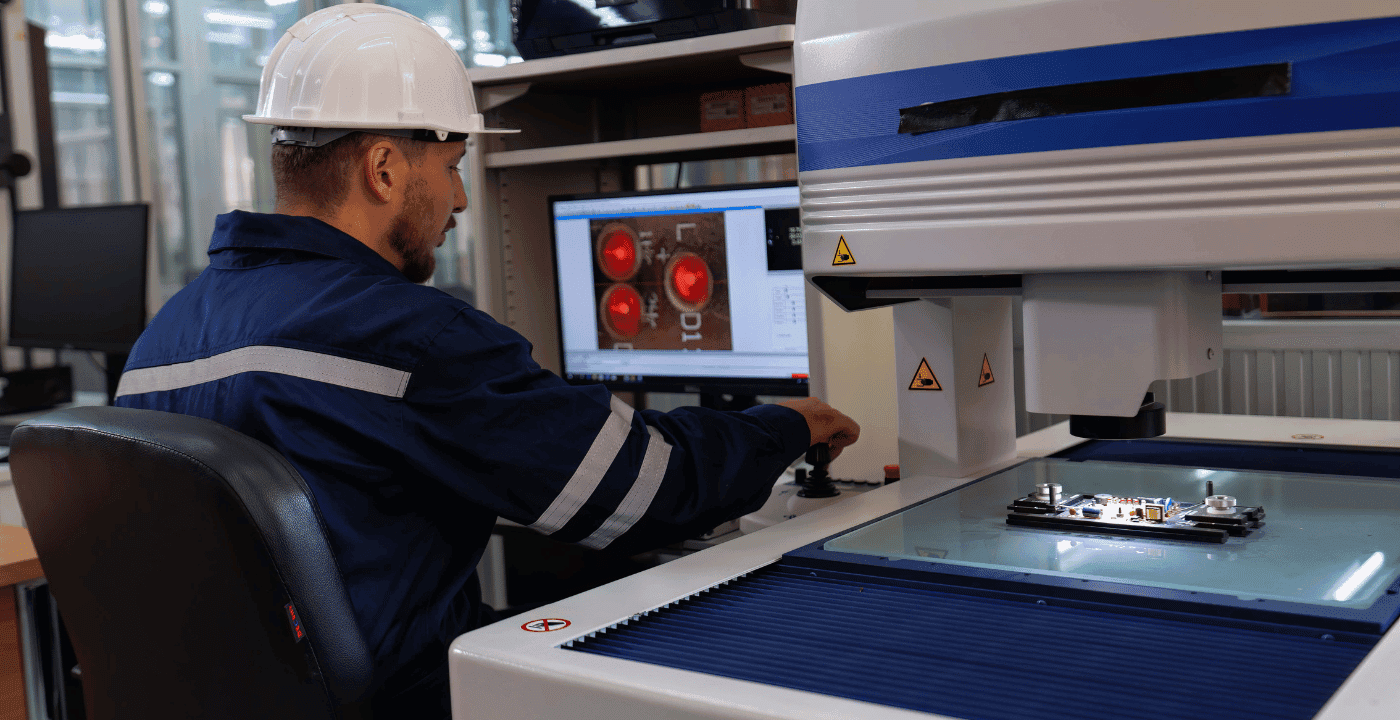
This method employs high-resolution cameras and software to capture and analyze images from multiple angles.
Overview of AOI Inspection in PCB
Speed and Consistency: AOI systems provide faster results than manual inspections, significantly improving efficiency and minimizing variability in output quality.
Defects Detected: AOI can identify various defects, including missing components, soldering issues, component misalignment, and surface conditions.
Integration of Advanced Features: Many AOI systems incorporate 2D and 3D inspection capabilities, allowing for height measurements and detection of lifted leads.
PCB X-Ray Inspection
X-ray inspection is a non-destructive testing method designed to examine internal PCB structures not visible through surface inspection techniques.
It’s especially beneficial for complex or multilayer boards.
When to Use X-Ray Technology
Detection of Hidden Defects: X-ray is effective for finding hidden solder joint defects like voids or cracks beneath components. It highlights issues that may cause intermittent failures.
Internal Layer Analysis: This method allows examination of internal layers within multilayer PCBs, helping identify shorts, opens, or misalignments that could lead to circuit failures.
Component Integrity Assessment: X-ray can assess internal structures of components, uncovering manufacturing defects in components like chip resistors and capacitors.
Advantages of X-Ray Inspection
Non-Destructive: X-ray inspection preserves the integrity of PCBs, enabling quality checks without damaging the product.
Detailed Visualization: X-ray systems typically provide high-resolution images, while computed tomography (CT) can produce 3D reconstructions for precise identification of defects.
Limitations of X-Ray Inspection
Cost and Complexity: X-ray machines are among the most expensive inspection tools, and they require specialized training for operators, increasing operational costs.
Slower Processing Times: The complex image processing in X-ray inspections can lead to longer inspection durations compared to AOI, potentially slowing production.
Essential PCB Visual Inspection Equipment
In addition to visual inspection machines, several key testing equipment types support quality assurance efforts:
Role of Advanced Technologies in Quality Control
As manufacturing processes advance, leveraging AI AOI software can further enhance PCB visual inspection.
Here are the benefits of AI AOI:
Enhanced Defect Detection: Deep learning catches complex micro-solder and surface defects without constant reprogramming.
Automated Classification: Reduces manual review and speeds up inspection decisions in real time.
Continuous Learning: Adapts to new products and process changes as your production evolves.
Low False Positives: Cuts unnecessary rework so teams focus on real defects.
Seamless Integration: Works with existing AOI systems and workflows – no production overhaul required.
How Much Yield Are False Positives Costing You?
See 99% accurate AI inspection in action.
Frequently Asked Questions
What are the key differences between 2D and 3D Automated Optical Inspection (AOI) systems?
2D AOI systems primarily detect surface defects by analyzing images from multiple angles, while 3D AOI systems add height measurement capabilities. This allows 3D systems to identify issues like lifted leads or insufficient solder, providing a more comprehensive inspection.
How often should I calibrate my inspection equipment?
Calibration frequency varies depending on usage, but it is typically recommended to calibrate inspection equipment at least once a year or after a significant production change. Regular calibration ensures consistent accuracy and reliability in defect detection.
Can visual inspection methods be used in conjunction with other testing methods?
Yes, visual inspection methods can be effectively combined with other testing techniques, such as electrical testing and in-circuit testing. This integrated approach enhances overall quality control and ensures comprehensive evaluation of the PCB’s functionality and integrity.
Conclusion
PCB failures are expensive, slow, and usually traced back to something small that slipped through inspection. A solder bridge. A misaligned component. A void hidden beneath a BGA.
That’s why PCB visual inspection carries so much weight on the production floor.
Manual inspection brings experience and flexibility. AOI delivers speed and repeatability. X-ray exposes what surface methods can’t see. When these PCB inspection methods are applied with structure, standards, and the right equipment, quality control becomes predictable instead of reactive.
If improving yield, reducing false positives, and cutting reinspection time are priorities, it’s worth seeing how 99% accurate AI-powered PCB visual inspection performs on your boards. Book a free demo and evaluate it against your own production data.




![PCB Visual Inspection Guide, Equipment & Methods [2026]](/_next/image?url=https%3A%2F%2F303922.eu15.myftpupload.com%2Fwp-content%2Fuploads%2F2025%2F02%2FAverroes.ai-Blog-Covers-JA-9.png&w=3840&q=75)
![Inspection Methods Explained [Manual, Remote & Visual]](/_next/image?url=https%3A%2F%2F303922.eu15.myftpupload.com%2Fwp-content%2Fuploads%2F2026%2F07%2FAverroes.ai-Blog-Covers-JA-4.jpg&w=3840&q=75)



Every board that leaves your line carries your reputation with it. One missed solder bridge or misaligned component can ripple into rework, RMAs, or worse.
That’s why PCB visual inspection sits at the heart of electronics manufacturing.
The challenge is choosing the right mix of speed, depth, and cost across different inspection methods.
We’ll break down the tools, workflows, and tradeoffs that shape inspection performance on real production floors.
Key Notes
What Is PCB Visual Inspection?
Visual inspection in PCB manufacturing involves examining circuit boards for visible defects using either manual techniques or automated methods.
The primary goal is to verify that the board is free from flaws that could impede functionality or compromise reliability.
Common issues checked during visual inspections include:
Importance of PCB Visual Inspection in Electronics Manufacturing
PCB visual inspection plays a vital role in maintaining the reliability and performance of electronic devices.
Here are some key points underscoring its importance:
PCB Visual Inspection Procedures
Effective PCB visual inspection requires a systematic and organized approach:
1. Review Inspection Criteria
Before starting any inspection, familiarize yourself with the specific criteria outlined by relevant standards like IPC-A-610.
Understanding these criteria helps in identifying potential defects and maintaining quality standards.
2. Prepare the Workspace
A clean and organized workspace is essential for effective inspection. Ensure the area is clear of unnecessary items to prevent contamination.
Proper grounding is also critical to avoid electrostatic discharge (ESD) damage, so confirm that you and the workspace meet ESD safety standards.
3. Set Up Lighting
Adequate lighting is vital for visual inspection. According to IPC requirements, a minimum of 1000 lumens per square meter should be used.
Utilize task lighting, overhead lights, or portable light sources to create well-lit conditions that enhance visibility.
4. Utilize Magnification Tools
Magnifying tools, such as lenses or digital microscopes, provide better visibility of fine details on the PCB.
Choosing the right magnification is crucial—typically, levels between 5x and 10x suffice for most components.
5. Conduct the Inspection
Inspect the PCB systemically, moving methodically to cover different areas. Begin with component placement, checking for proper alignment and connections.
Pay close attention to common defects such as cold solder joints, solder bridges, and misaligned components.
Document any anomalies using a checklist to ensure thoroughness and traceability.
6. Final Review and Documentation
After completing the inspection, conduct a final review of all noted defects. Accurately log these findings and prepare a detailed report outlining the issues and recommendations for corrective action.
This documentation aids in tracking recurring problems and supports continuous improvement efforts.
PCB Visual Inspection Guidelines
Types of PCB Inspection Methods
Manual Visual Inspection (MVI)
Manual Visual Inspection remains one of the most traditional methods for assessing PCB quality, requiring skilled technicians to examine boards for surface-level defects.
Techniques and Best Practices
Limitations of MVI
Automated Optical Inspection (AOI)
Automated Optical Inspection uses advanced technology for automatic PCB inspections.
This method employs high-resolution cameras and software to capture and analyze images from multiple angles.
Overview of AOI Inspection in PCB
PCB X-Ray Inspection
X-ray inspection is a non-destructive testing method designed to examine internal PCB structures not visible through surface inspection techniques.
It’s especially beneficial for complex or multilayer boards.
When to Use X-Ray Technology
Advantages of X-Ray Inspection
Limitations of X-Ray Inspection
Essential PCB Visual Inspection Equipment
In addition to visual inspection machines, several key testing equipment types support quality assurance efforts:
Role of Advanced Technologies in Quality Control
As manufacturing processes advance, leveraging AI AOI software can further enhance PCB visual inspection.
Here are the benefits of AI AOI:
Seamless Integration: Works with existing AOI systems and workflows – no production overhaul required.
How Much Yield Are False Positives Costing You?
See 99% accurate AI inspection in action.
Frequently Asked Questions
What are the key differences between 2D and 3D Automated Optical Inspection (AOI) systems?
2D AOI systems primarily detect surface defects by analyzing images from multiple angles, while 3D AOI systems add height measurement capabilities. This allows 3D systems to identify issues like lifted leads or insufficient solder, providing a more comprehensive inspection.
How often should I calibrate my inspection equipment?
Calibration frequency varies depending on usage, but it is typically recommended to calibrate inspection equipment at least once a year or after a significant production change. Regular calibration ensures consistent accuracy and reliability in defect detection.
Can visual inspection methods be used in conjunction with other testing methods?
Yes, visual inspection methods can be effectively combined with other testing techniques, such as electrical testing and in-circuit testing. This integrated approach enhances overall quality control and ensures comprehensive evaluation of the PCB’s functionality and integrity.
Conclusion
PCB failures are expensive, slow, and usually traced back to something small that slipped through inspection. A solder bridge. A misaligned component. A void hidden beneath a BGA.
That’s why PCB visual inspection carries so much weight on the production floor.
Manual inspection brings experience and flexibility. AOI delivers speed and repeatability. X-ray exposes what surface methods can’t see. When these PCB inspection methods are applied with structure, standards, and the right equipment, quality control becomes predictable instead of reactive.
If improving yield, reducing false positives, and cutting reinspection time are priorities, it’s worth seeing how 99% accurate AI-powered PCB visual inspection performs on your boards. Book a free demo and evaluate it against your own production data.