EUV phase defects are invisible to standard DUV and SEM inspection tools.
AI reduces false positives by 95–99% on existing hardware, no new equipment needed.
Photomask Defect Types – What Inspection Must Find
Not all photomask defects behave the same way. They differ in root cause, printability, detectability, and severity.
The industry classifies them into four main categories:
Pattern (Hard) Defects
Permanent errors in the mask pattern – directly printable in active circuitry because they change transmission or phase in the aerial image.
Types: Extra absorber, missing absorber, line breaks, bridges, pinholes, CD errors
Random: Isolated line break from a local etch glitch, a pinhole from resist processing
Systematic: Global CD error from e-beam calibration that replicates across the entire mask
Particle & Contamination (Soft) Defects
Surface particles, organic contamination, pellicle haze – conditionally printable depending on size and location.
A particle large enough relative to feature size will print
A small particle in the scribe line probably won’t
The catch: “large enough” gets smaller with every node.
Absorber & Film Defects
Coating thickness variation
Phase errors in phase-shift masks (PSMs)
Absorber delamination
These affect CD uniformity and image contrast across the field. Not always catastrophic individually, but cumulatively damaging to parametric yield.
EUV Blank & Multilayer Defects
The hardest category.
EUV masks are built on 40+ alternating Mo/Si multilayer pairs. Buried pits, bumps, or embedded particles in those layers cause phase shifts and linewidth variation – with no amplitude signature in conventional DUV or SEM inspection.
Standard tools can’t see them. They still print.
Catastrophic vs. Tolerable Defects
Mask shops and fabs classify defects by size, type, and electrical impact, not just by physical visibility:
Classification
Examples
Disposition
Catastrophic
Chrome spots, pinholes, clear breaks, bridges in active circuitry, EUV CD collapse
Zero tolerance above specified size threshold
Tolerable
Small defects in scribe lines, dummy fill, non-critical areas below printability threshold
Count-limited acceptance in spec
Manageable (EUV)
Known blank defects that can be pattern-shifted or repaired via focused e-beam
Engineer disposition with verification
The Key Principle:
Defect size alone doesn’t determine risk.
Location, layer criticality, and CD impact all factor in. A 30nm defect in a forbidden region of a critical FEOL layer is catastrophic. The same defect in scribe line dummy fill may be irrelevant.
The Photomask Inspection Process
Photomask inspection is a series of verification gates throughout the mask manufacturing and qualification lifecycle.
Blank Inspection:
Before patterning, the substrate and EUV multilayer are inspected for surface defects, particles, and (for EUV) phase/amplitude anomalies in the multilayer stack.
For EUV masks, actinic blank inspection at 13.5nm is the gold standard here.
Post-Write / Post-Etch Inspection:
First patterned inspection pass after e-beam writing and etch. The goal is catching pattern defects introduced during the write and etch process before any repair attempt.
Repair & Re-Inspection Loop:
Detected defects are repaired via focused e-beam deposition (adding material) or etch (removing it). After repair, the mask goes back through inspection to verify the repair was clean and didn’t introduce secondary damage.
AIMS Verification:
Aerial Image Measurement System – simulates the actual lithographic image of specific defect sites to confirm that residual or repaired defects won’t print at wafer level.
This is a targeted verification step, not a full-field screen.
Post-Pellicle Inspection:
After the protective pellicle is mounted, the mask should ideally be re-inspected.
EUV pellicles are fragile and largely opaque to DUV light, which makes this step technically awkward and a persistent gap in the workflow.
In-Use Monitoring:
Masks are re-inspected periodically during their production lifetime to catch haze growth, new contamination, or handling damage accumulated during scanner use.
When A Defect Is Found…
The disposition decision (scrap, repair, accept, or pattern-shift) depends on defect type, size, layer criticality, and whether the repair verifies cleanly.
For EUV blank defects, pattern shift (repositioning the layout away from a known blank defect location) is a common mitigation where repair isn’t viable.
Photomask Inspection Methods (How Defects Are Found)
Each inspection method involves a fundamental tradeoff between sensitivity, throughput, and cost. No single method covers everything.
Method
Sensitivity
Throughput
Primary Use
Optical DUV (193nm)
~50–60nm defect size
High
Full-field production screening
E-beam inspection
Sub-20nm
Very low
Critical verification, not full-field
Actinic EUV (13.5nm)
Phase defects + amplitude
Very low
EUV blank and patterned mask (limited availability)
AIMS
N/A (printability sim)
Single-site
Targeted printability verification
AFM / SEM
Nanometer-scale
Very low
High-res review and metrology
Optical Die-to-Die & Die-to-Database Inspection
The production standard.
DUV optical tools compare either:
Die-to-die: same feature across adjacent chips
Die-to-database: mask pattern against original design intent
Effective sensitivity runs down to roughly 50–60nm defect size under realistic throughput conditions, with leading tools pushing below this.
The tradeoff:
At advanced nodes, practically important defects exist at or near this resolution limit.
E-Beam Inspection
Sub-20nm sensitivity, but orders of magnitude slower than optical.
Too slow for full-field screening of every mask, every time. Used for high-sensitivity verification of specific critical layers or suspect regions flagged by optical tools.
Actinic Inspection (13.5nm)
The only method that fully captures EUV phase defects.
Optical tools catch amplitude defects but miss shallow pits and phase issues that still print. Production-scale actinic patterned mask inspection remains extremely limited – tools are few, expensive, and slow.
AI Defect Classification
AI now sits on top of all of these methods, and it materially changes the operational picture.
Machine learning models trained on defect image libraries:
The KLA TeraScan photomask inspection platform is the industry benchmark – high-sensitivity optical inspection with die-to-database comparison and recipe-driven defect classification across DUV masks.
Lasertec has also developed actinic patterned inspection capability, though full production deployment at scale remains limited.
ZEISS – Aerial Image Verification & SEM Review
ZEISS supplies AIMS platforms for aerial image verification and SEM review tools for high-resolution defect analysis.
Photomask Inspection Market | Where the Investment Is Going
The market reflects where the industry is heading:
EUV mask inspection and pellicle monitoring projected to reach ~$2.22B by 2036
46% surge in EUV mask inspection tool adoption as fabs transition from DUV to EUV
At advanced nodes, sampling-based inspection is no longer viable – full-reticle inspection is becoming the standard expectation
AI Software – Extending What Existing Hardware Can Do
AI inspection platforms deploy on top of existing inspection hardware – KLA, AOI, and other tools – to extend detection capability without new capital equipment:
Near-zero false positives
99%+ detection accuracy
WatchDog detection for unknown defect modes that fall outside configured rule sets
How Much Yield Is Slipping Through Your Inspection Gaps?
See what 99%+ detection catches that your current setup doesn’t
EUV Mask Inspection (The Hardest Problem in Photomask Manufacturing)
EUV mask inspection is categorically harder than DUV mask inspection. The gap is structural, not incremental.
DUV vs. EUV: A Fundamentally Different Stack
The Actinic Inspection Gap
Only 13.5nm light fully captures EUV phase defects.
The economics of closing that gap are brutal:
A production-ready actinic patterned mask inspection tool would require $500M+ in investment
The addressable customer base: a handful of EUV mask shops globally
Result: broad availability remains years away
High-NA EUV (Making A Hard Problem Harder)
High-NA EUV compounds the challenge on three fronts:
Anamorphic masks + oblique incidence change how defects manifest in the aerial image
Thicker absorbers make traditional 2D, CD-based defect criteria less reliable
Curvilinear and ILT masks create far more complex edge shapes that inflate nuisance defect counts in ways standard inspection recipes aren’t built to handle
Where the Industry Is Now
In the interim, fabs rely on a patchwork of methods to manage the residual blind spots:
Actinic blank inspection
Wafer print studies
Pattern shift strategies
AFM/SEM review
AI-based classification
It works, but it’s not a complete solution.
Photomask Inspection FAQs
What is the difference between KLA and Lasertec in photomask inspection?
KLA and Lasertec occupy different parts of the photomask inspection market. KLA dominates optical patterned mask inspection for DUV – the TeraScan series is the industry benchmark for high-throughput, die-to-database screening. Lasertec leads on actinic inspection for EUV, with its ABICS series the primary tool for blank and patterned EUV mask inspection at 13.5nm – the wavelength required to detect phase defects that DUV tools miss.
How big is the photomask inspection market?
The photomask inspection market is growing rapidly, driven by EUV adoption. The EUV mask inspection and pellicle monitoring segment alone is projected to reach approximately $2.22 billion by 2036, with a reported 46% surge in EUV-specific tool adoption already underway as leading fabs transition from DUV to EUV production at advanced nodes.
What does an AI photomask inspection platform do that traditional tools can’t?
AI photomask inspection platforms like Averroes deploy on top of existing inspection hardware (KLA, AOI, and other tools) and deliver capabilities rule-based systems can’t match: 99%+ defect detection accuracy, 95–99% reduction in false positives, and WatchDog anomaly detection that flags novel defect modes outside configured classification schemes. The result is faster mask release, fewer incorrect repair decisions, and higher yield – without replacing or upgrading existing capital equipment.
What causes photomask defects during manufacturing?
Photomask defects during manufacturing stem from several process stages – e-beam write errors (dose variation, stitching errors), resist processing issues (scumming, collapse, over/under-development), etch defects (over-etch causing line breaks, under-etch leaving bridges), and handling damage. EUV blank defects originate earlier still.
Conclusion
Photomask inspection sits at the intersection of the most demanding physics in manufacturing and the most unforgiving yield economics in the industry.
Miss a defect on a wafer, you lose a die. Miss it on the mask, and that defect systematically prints across every lot it touches – at sub-7nm, potentially taking 20%+ yield with it.
The field is under real pressure: EUV phase defects that standard optical tools can’t see, false positive burdens that slow release cycles, fragmented data pipelines that make systemic root cause analysis harder than it should be.
AI is closing several of these gaps. Not by replacing inspection hardware, but by making it significantly more capable. If you’re evaluating how AI can improve defect detection accuracy and reduce false positives on your existing inspection equipment, book a free demo with Averroes.




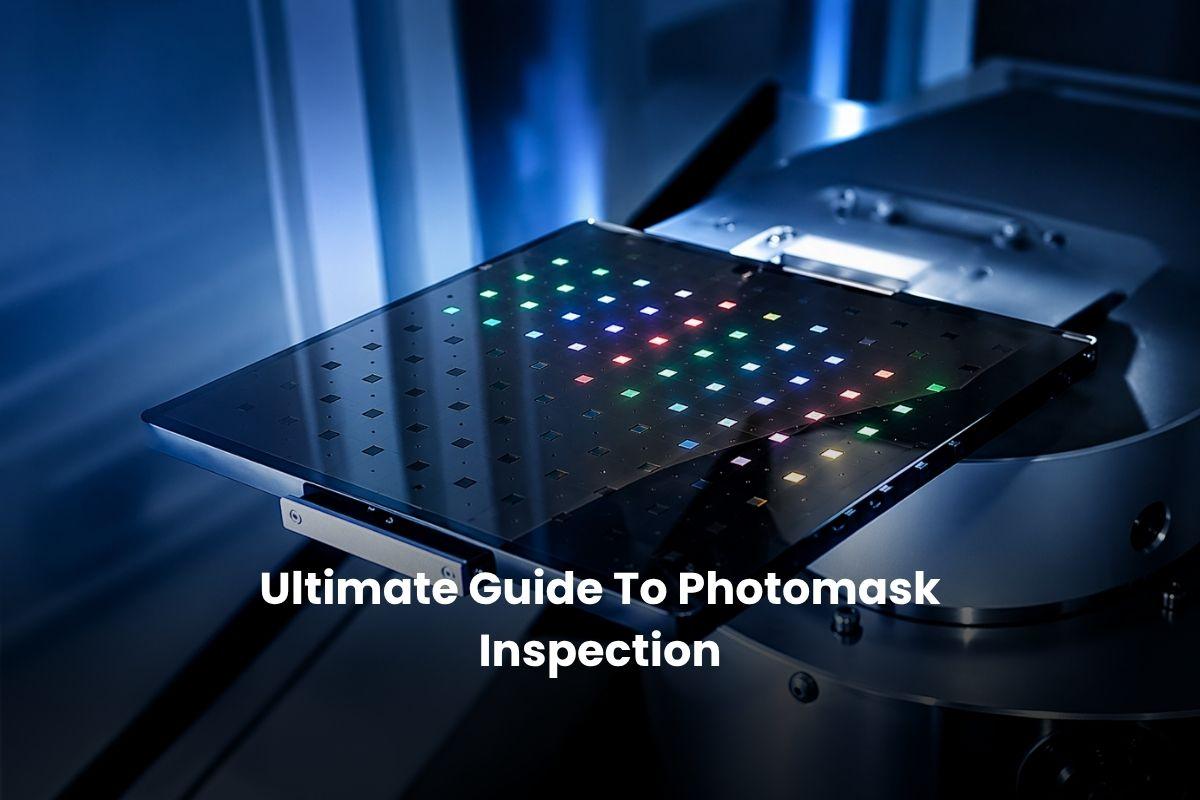


Miss a defect on a wafer and you lose a die.
Miss it on the mask and you lose the lot.
At sub-7nm, a single critical escape can push yield loss past 20% – replicated across every exposure field, on every wafer, before anyone notices.
We’ll cover the full photomask inspection picture: defect taxonomy, inspection methods, EUV’s unique challenges, key tools, and what comes next.
Key Notes
Photomask Defect Types – What Inspection Must Find
Not all photomask defects behave the same way. They differ in root cause, printability, detectability, and severity.
The industry classifies them into four main categories:
Pattern (Hard) Defects
Permanent errors in the mask pattern – directly printable in active circuitry because they change transmission or phase in the aerial image.
Particle & Contamination (Soft) Defects
Surface particles, organic contamination, pellicle haze – conditionally printable depending on size and location.
The catch: “large enough” gets smaller with every node.
Absorber & Film Defects
These affect CD uniformity and image contrast across the field. Not always catastrophic individually, but cumulatively damaging to parametric yield.
EUV Blank & Multilayer Defects
The hardest category.
EUV masks are built on 40+ alternating Mo/Si multilayer pairs. Buried pits, bumps, or embedded particles in those layers cause phase shifts and linewidth variation – with no amplitude signature in conventional DUV or SEM inspection.
Standard tools can’t see them.
They still print.
Catastrophic vs. Tolerable Defects
Mask shops and fabs classify defects by size, type, and electrical impact, not just by physical visibility:
The Key Principle:
Defect size alone doesn’t determine risk.
Location, layer criticality, and CD impact all factor in. A 30nm defect in a forbidden region of a critical FEOL layer is catastrophic. The same defect in scribe line dummy fill may be irrelevant.
The Photomask Inspection Process
Photomask inspection is a series of verification gates throughout the mask manufacturing and qualification lifecycle.
Blank Inspection:
Before patterning, the substrate and EUV multilayer are inspected for surface defects, particles, and (for EUV) phase/amplitude anomalies in the multilayer stack.
For EUV masks, actinic blank inspection at 13.5nm is the gold standard here.
Post-Write / Post-Etch Inspection:
First patterned inspection pass after e-beam writing and etch. The goal is catching pattern defects introduced during the write and etch process before any repair attempt.
Repair & Re-Inspection Loop:
Detected defects are repaired via focused e-beam deposition (adding material) or etch (removing it). After repair, the mask goes back through inspection to verify the repair was clean and didn’t introduce secondary damage.
AIMS Verification:
Aerial Image Measurement System – simulates the actual lithographic image of specific defect sites to confirm that residual or repaired defects won’t print at wafer level.
This is a targeted verification step, not a full-field screen.
Post-Pellicle Inspection:
After the protective pellicle is mounted, the mask should ideally be re-inspected.
EUV pellicles are fragile and largely opaque to DUV light, which makes this step technically awkward and a persistent gap in the workflow.
In-Use Monitoring:
Masks are re-inspected periodically during their production lifetime to catch haze growth, new contamination, or handling damage accumulated during scanner use.
When A Defect Is Found…
The disposition decision (scrap, repair, accept, or pattern-shift) depends on defect type, size, layer criticality, and whether the repair verifies cleanly.
For EUV blank defects, pattern shift (repositioning the layout away from a known blank defect location) is a common mitigation where repair isn’t viable.
Photomask Inspection Methods (How Defects Are Found)
Each inspection method involves a fundamental tradeoff between sensitivity, throughput, and cost. No single method covers everything.
Optical Die-to-Die & Die-to-Database Inspection
The production standard.
DUV optical tools compare either:
Effective sensitivity runs down to roughly 50–60nm defect size under realistic throughput conditions, with leading tools pushing below this.
The tradeoff:
At advanced nodes, practically important defects exist at or near this resolution limit.
E-Beam Inspection
Sub-20nm sensitivity, but orders of magnitude slower than optical.
Too slow for full-field screening of every mask, every time. Used for high-sensitivity verification of specific critical layers or suspect regions flagged by optical tools.
Actinic Inspection (13.5nm)
The only method that fully captures EUV phase defects.
Optical tools catch amplitude defects but miss shallow pits and phase issues that still print. Production-scale actinic patterned mask inspection remains extremely limited – tools are few, expensive, and slow.
AI Defect Classification
AI now sits on top of all of these methods, and it materially changes the operational picture.
Machine learning models trained on defect image libraries:
No hardware upgrade required.
Key Photomask Inspection Tools and Equipment
KLA – Optical Patterned Mask Inspection
KLA dominates optical patterned mask inspection.
The KLA TeraScan photomask inspection platform is the industry benchmark – high-sensitivity optical inspection with die-to-database comparison and recipe-driven defect classification across DUV masks.
Lasertec – Actinic EUV Inspection
Lasertec’s ABICS series leads actinic blank inspection for EUV masks.
Lasertec has also developed actinic patterned inspection capability, though full production deployment at scale remains limited.
ZEISS – Aerial Image Verification & SEM Review
ZEISS supplies AIMS platforms for aerial image verification and SEM review tools for high-resolution defect analysis.
Photomask Inspection Market | Where the Investment Is Going
The market reflects where the industry is heading:
AI Software – Extending What Existing Hardware Can Do
AI inspection platforms deploy on top of existing inspection hardware – KLA, AOI, and other tools – to extend detection capability without new capital equipment:
How Much Yield Is Slipping Through Your Inspection Gaps?
See what 99%+ detection catches that your current setup doesn’t
EUV Mask Inspection (The Hardest Problem in Photomask Manufacturing)
EUV mask inspection is categorically harder than DUV mask inspection. The gap is structural, not incremental.
DUV vs. EUV: A Fundamentally Different Stack
The Actinic Inspection Gap
Only 13.5nm light fully captures EUV phase defects.
The economics of closing that gap are brutal:
High-NA EUV (Making A Hard Problem Harder)
High-NA EUV compounds the challenge on three fronts:
Where the Industry Is Now
In the interim, fabs rely on a patchwork of methods to manage the residual blind spots:
It works, but it’s not a complete solution.
Photomask Inspection FAQs
What is the difference between KLA and Lasertec in photomask inspection?
KLA and Lasertec occupy different parts of the photomask inspection market. KLA dominates optical patterned mask inspection for DUV – the TeraScan series is the industry benchmark for high-throughput, die-to-database screening. Lasertec leads on actinic inspection for EUV, with its ABICS series the primary tool for blank and patterned EUV mask inspection at 13.5nm – the wavelength required to detect phase defects that DUV tools miss.
How big is the photomask inspection market?
The photomask inspection market is growing rapidly, driven by EUV adoption. The EUV mask inspection and pellicle monitoring segment alone is projected to reach approximately $2.22 billion by 2036, with a reported 46% surge in EUV-specific tool adoption already underway as leading fabs transition from DUV to EUV production at advanced nodes.
What does an AI photomask inspection platform do that traditional tools can’t?
AI photomask inspection platforms like Averroes deploy on top of existing inspection hardware (KLA, AOI, and other tools) and deliver capabilities rule-based systems can’t match: 99%+ defect detection accuracy, 95–99% reduction in false positives, and WatchDog anomaly detection that flags novel defect modes outside configured classification schemes. The result is faster mask release, fewer incorrect repair decisions, and higher yield – without replacing or upgrading existing capital equipment.
What causes photomask defects during manufacturing?
Photomask defects during manufacturing stem from several process stages – e-beam write errors (dose variation, stitching errors), resist processing issues (scumming, collapse, over/under-development), etch defects (over-etch causing line breaks, under-etch leaving bridges), and handling damage. EUV blank defects originate earlier still.
Conclusion
Photomask inspection sits at the intersection of the most demanding physics in manufacturing and the most unforgiving yield economics in the industry.
Miss a defect on a wafer, you lose a die. Miss it on the mask, and that defect systematically prints across every lot it touches – at sub-7nm, potentially taking 20%+ yield with it.
The field is under real pressure: EUV phase defects that standard optical tools can’t see, false positive burdens that slow release cycles, fragmented data pipelines that make systemic root cause analysis harder than it should be.
AI is closing several of these gaps. Not by replacing inspection hardware, but by making it significantly more capable. If you’re evaluating how AI can improve defect detection accuracy and reduce false positives on your existing inspection equipment, book a free demo with Averroes.